Dress Color: Paint by Number
Efun TeamBoard
4.926.00 Reviews
- Version
- 1.0.8
- Installs
- 50.00K
- Age Rating
- Everyone
Screenshots
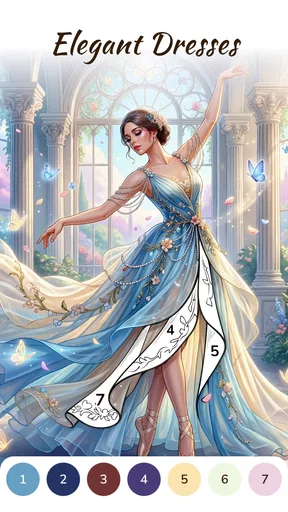
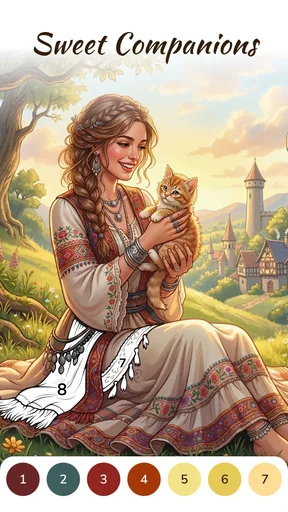
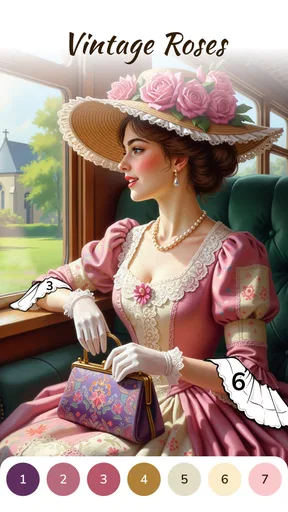
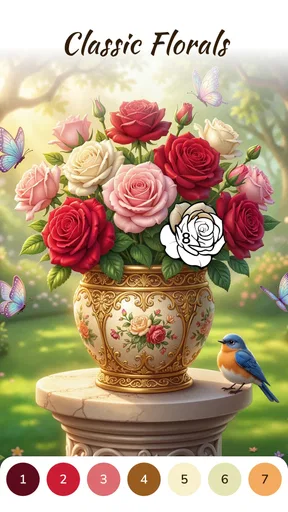

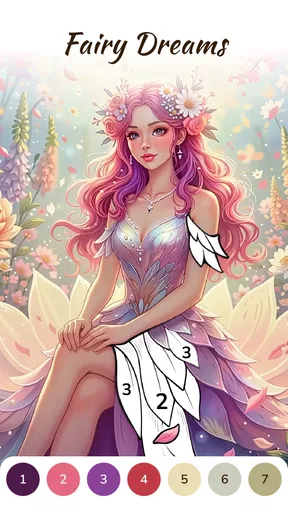
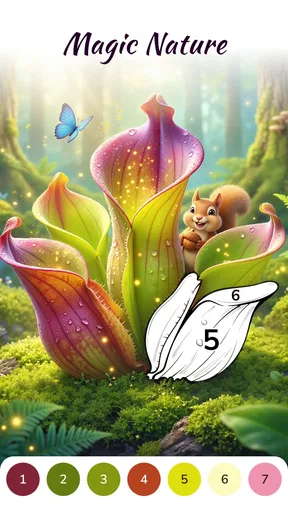
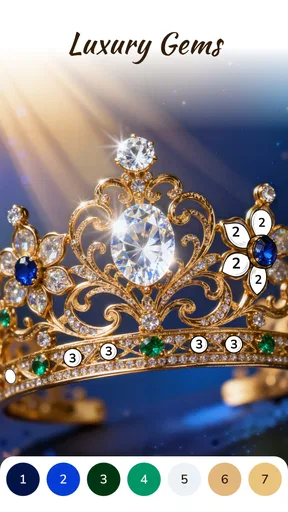
Our Review of Dress Color: Paint by Number
 Analysis by Appyee
I went into Dress Color: Paint by Number expecting a simple coloring game, and that is exactly where its appeal begins. It does not ask me to learn a complicated ruleset or compete against another player. Instead, I choose a fashion-focused illustration, fill the numbered areas with matching colors, watch the outfit gradually take shape, and decide whether I want to start another design. The theme is built around dresses, couture, and polished styling rather than landscapes or abstract patterns, so the experience feels more like arranging a digital wardrobe than completing a traditional board puzzle.
That distinction matters. As a board game, this is a quiet, individual activity rather than a strategic contest. There are no turns to manage and no opponent waiting for my move. My attention stays on the next small section of the picture. When I have a few spare minutes, that narrow focus can be relaxing; when I want deep strategy, social play, or a demanding challenge, it is much less suitable. My overall impression is that the game works best as a gentle visual routine: one action, one piece of visible progress, a finished image, then the temptation to begin again.
How the coloring loop feels in actual use
I find the coloring loop easiest to enjoy when I treat each session as a small visual task, not a race to finish the whole design. That makes the tiny numbered areas feel like deliberate details rather than obstacles, and it gives me a natural point to pause if my attention starts to wander. From there, the useful question is what to check when the next tap or color change does not seem to behave as expected.
The first action is deliberately simple
The opening decision is not about tactics. I pick a high-fashion design and begin searching for the numbered areas that correspond to the selected color. That first tap establishes the entire rhythm. Instead of deciding what a dress should look like from scratch, I follow a guided structure and let the illustration reveal itself gradually. This makes the game approachable for someone who enjoys coloring but does not want to choose a palette or worry about ruining a composition.
The fashion theme gives the first action more personality than a plain geometric coloring page. A sleeve, skirt, accessory, or decorative detail can become the next target, and the picture feels more coherent as those sections fill in. I find that useful when I want a low-pressure activity after work: I can start without planning, complete a few areas, and stop without leaving behind a complicated unfinished puzzle.
There is also a small trade-off in this design. Because the numbers guide the result, the creative freedom is limited compared with a blank canvas or a free-coloring application. I am not really designing a new outfit; I am uncovering the intended appearance of an existing one. That is satisfying if I like order and completion, but it may feel restrictive if my favorite part of coloring is experimenting with unusual combinations.
Feedback keeps each tap meaningful
The strongest part of the experience is the immediate visual feedback. A correct section changes the illustration, so even a short sequence of taps produces a visible difference. The response is easy to understand: I select the needed color, locate the matching area, and see another piece of the composition settle into place. That direct connection between action and result is what makes the loop feel calming rather than tedious.
I especially like the middle of a design, when enough of the clothing has been completed to make the final look recognizable but several details are still waiting. At that point, each small area has context. I am no longer coloring isolated shapes; I am completing the structure of an outfit. The feedback becomes more rewarding because I can see how the remaining sections affect the balance of the whole image.
For a practical session, I would use it during a short break with a clear stopping point in mind. Completing a handful of areas gives me a contained activity that does not demand the same concentration as a strategy board game. The game is also suitable for players who prefer visual progress over score chasing. Since the central satisfaction comes from filling the illustration, I do not need to compare my result with anyone else to understand whether I have made progress.
Small details change the pace
Not every section feels equally satisfying. Large areas can produce quick progress, while tiny decorative zones require more careful attention and may slow the rhythm. That variation is useful because a page made only of large spaces would become repetitive, but it also means the experience is not always equally relaxing. When I am tired, I prefer moving through broader parts of the dress; when I want something more precise, the smaller accents give the session extra focus.
My most useful tip is to avoid treating every visible number as an urgent target. I get a smoother session by following one color through the illustration when possible, then switching to another. That reduces the constant mental change between colors and lets me see a particular shade develop across the outfit. It also makes the finished design feel more intentional, even though the numbered structure is doing the planning underneath.
Another helpful habit is to pause briefly when the image becomes crowded. Rather than tapping quickly and losing track of the selected color, I scan for the remaining matching areas before continuing. This is a small adjustment, but it makes the difference between a peaceful coloring session and a slightly frustrating search through details. The game is simple enough that these habits are not required, yet they improve the flow for me.
The reward is completion, not competition
The main reward is seeing an elegant illustration become complete. The unfinished state creates a mild pull to continue, while the finished design provides a clear sense of closure. I do not need a complicated progression system to understand the payoff: the reward is the completed fashion image itself and the satisfaction of having removed the remaining blank sections.
That reward suits a particular kind of player. If you enjoy collecting completed visual pieces, arranging a calm routine, or giving your hands something simple to do while listening to music, the structure is appealing. It can also work for a younger player because the basic action is easy to grasp and the content rating is Everyone. I would still frame it as a coloring activity rather than a conventional board challenge, since the pleasure comes from completion and presentation instead of tactical decisions.
The free entry point helps make trying it uncomplicated. The game is free to download, although optional in-app items range from $0.99 to $49.99 per item. That price range is worth keeping in mind before treating the app as a completely cost-free hobby. I would begin with the available experience and only consider spending if the particular content or convenience offered feels valuable over time. For a casual player, there is no reason to assume that purchasing is necessary to understand the basic loop.
One thing I would not do is measure its value by the number of minutes it can occupy in one sitting. This is not the kind of game I open expecting a long campaign. Its reward is better understood as a resettable pause: complete a small visual task, enjoy the result, and leave. If I judge it by that standard, the restrained design makes more sense.
Why another session begins
After finishing an illustration, the reason to continue is the same reason the first session worked: there is another fashion design waiting to be revealed. The reset is gentle rather than dramatic. I move from a completed outfit back to a new set of numbered spaces, and the familiar process starts again with a different visual arrangement.
This repeatability is the game’s strength and its boundary. The loop is easy to re-enter because I already understand the controls and do not have to remember a complicated objective. However, players who need constant novelty, increasingly difficult rules, or a strong narrative may find the reset too similar from one design to the next. The game depends on enjoying the act of coloring itself. Without that interest, the new-session appeal can fade quickly.
I can imagine using it in several everyday situations. On a commute, I would choose it when I wanted a quiet activity rather than a competitive match. At home, it could fill the few minutes while waiting for food or taking a break from a larger task. Before bed, the uncomplicated sequence may be preferable to a fast action game, provided the screen does not encourage me to keep going longer than intended. In each case, the useful feature is not intensity but the low cost of restarting attention.
There is a subtle psychological advantage to the reset: I can stop after a completed portion without feeling that I have abandoned a complex game. Even when an illustration is unfinished, the next action is obvious. That makes the app easier to pick up intermittently than a strategy title where forgetting the current position can make the next session feel like work.
Where it fits among coloring and board games
Compared with a traditional board game, this is far more solitary and passive in its challenge. There is no bluffing, resource management, route planning, or opponent pressure. Compared with a free-form digital coloring tool, it is more structured because the numbered areas determine the path. And compared with a competitive puzzle, it places almost no emphasis on speed or ranking. Its middle ground is clear: guided coloring presented with the accessible feel of a casual board title.
That positioning makes it a better choice than a conventional board game when I want to unwind without learning rules. It is a better choice than a completely blank coloring app when I want a finished result without making artistic decisions. On the other hand, a classic board game is the stronger option for social interaction and strategic depth, while a free-coloring app wins for personal expression. Choosing this game means accepting that its pleasure comes from following a design to completion.
The couture presentation also narrows its audience in a useful way. Someone who enjoys dresses, styling, and polished fashion illustrations may connect with the artwork immediately. Someone who prefers animals, scenery, mandalas, or story-driven themes may not feel the same pull. The theme is not just decoration; it determines whether the next design feels inviting or interchangeable.
Practical considerations before downloading
The game comes from Efun Team and is currently listed as version 1.0.8. It supports devices running Android 7.0 or later, which makes it accessible to many older Android phones while still leaving very old devices outside its range. I would check the operating system on an older handset before planning to use it there, especially if the phone is kept as a dedicated casual-gaming device.
Its audience response is notably positive, with a 4.9 average from around a thousand ratings and more than fifty thousand installs. Those figures suggest that the basic idea is connecting with the people who have tried it, but they do not change the central question I would ask myself: do I enjoy guided fashion coloring enough to repeat it? A high average cannot turn a quiet completion game into a strategic one, so personal taste remains more important than the headline rating.
The Everyone age rating makes the concept broadly approachable, but younger players may still need guidance around optional purchases. The presence of individual items priced from $0.99 to $49.99 means I would review purchase settings before handing the device to a child. For an adult using the game casually, I would treat purchases as a personal budget decision rather than part of the core reason to install it.
One limitation is that the experience can become repetitive if I play continuously. The same basic cycle—choose an illustration, match colors, complete sections, and begin again—does not transform into a deeper system simply because I spend more time with it. I would recommend short sessions and variety in how I approach each page. If I wanted a game that continuously tests new skills, I would choose something else.
Who will enjoy it most
I would recommend this game to someone who likes fashion artwork, paint-by-number activities, and visible progress without pressure. It is particularly well suited to players who want a quick mental break, dislike losing, or prefer a predictable routine. The numbered structure can also help anyone who enjoys coloring but feels uncertain about selecting colors or composing an image from an empty page.
I would be more cautious recommending it to a player who wants multiplayer interaction, strategic decisions, a story, or a demanding challenge. It is also not the best fit for someone who considers coloring valuable mainly because it allows unrestricted self-expression. The game gives me a polished destination, but less control over the route and final palette.
For families, the simple interaction and Everyone rating make it approachable, while the purchase range deserves adult attention. For adults, the fashion theme may feel either stylish or too narrow depending on personal taste. For older Android users, the minimum operating system is a practical checkpoint. These details matter more than broad claims about relaxation because they determine whether the app fits a particular person’s device and habits.
My verdict on the complete loop
The loop is easy to describe but effective in practice: I tap the right numbered area, receive immediate visual confirmation, watch an outfit become more complete, finish the design, and then decide whether another page sounds appealing. The action is clear, the feedback is visible, the reward is tangible, and the reset is painless. That combination gives the game a dependable rhythm without pretending to offer more depth than it does.
The best reason to play is the calm satisfaction of turning a partially hidden couture illustration into a finished design. I would not choose it over a social board game or a strategy puzzle, but I would choose it over a more demanding title when I want something gentle and visually focused. The strongest sessions are short enough to feel refreshing, with enough progress to make stopping feel natural.
In my experience, the game earns its place as a casual coloring option because it understands the value of a small, repeatable task. Its limitations are equally clear: restricted creative control, a narrow fashion theme, and a loop that may feel repetitive for players seeking escalation. If those trade-offs sound acceptable, the free download makes it easy to try. If what you really want is competition, artistic freedom, or complex board strategy, another category will serve you better.
For the right player, Dress Color: Paint by Number is a pleasant reset button rather than a major gaming commitment. I can open it, complete a few carefully chosen sections, enjoy the visual payoff, and return later without relearning anything. That simple promise is modest, but the execution gives it enough polish and focus to make another session feel inviting.
Verdict
Strengths of Dress Color: Paint by Number
- Relaxing coloring sessions suitable for short breaks or longer play.
- Simple tap-to-fill controls make it accessible for beginners.
- Wide range of fashion-themed illustrations to complete.
- Helpful hints make difficult or tiny sections easier to find.
- Works well as a casual, low-pressure creative activity.
Limitations of Dress Color: Paint by Number
- Some artwork and tools may require watching ads or making purchases.
- Small sections can be difficult to select on compact phone screens.
- The painting experience may feel repetitive after extended sessions.
- Progress can depend on an internet connection for certain content.
- Frequent advertising may interrupt the otherwise relaxing gameplay.
Other Releases by Efun Team
View All
Pixie Color: Paint by Number
Board4.8
Similar Picks in This Category
View All
Ludo King®
Gametion4.1

Ludo
Yarsa Games4.6

Tile Master® - Matching Game
Higgs Studio3.6

Checkers Online
CC Games4.6

Dominoes
Loop Games4.7

Chess
Chess Prince4.6
Frequently Asked Questions
What is Dress Color: Paint by Number?
Dress Color: Paint by Number is a relaxing coloring game focused on fashion-themed illustrations. After selecting a design, you fill numbered sections with the corresponding colors to complete dresses, outfits, accessories, and other stylish artwork. The gameplay is simple enough for casual players, while the wide range of detailed patterns can provide a satisfying creative activity during short breaks or longer relaxing sessions.
How does the coloring system work in Dress Color: Paint by Number?
Each picture is divided into numbered areas, and every number matches a specific color in the palette. You can tap a color and then select the highlighted sections, making it easy to follow the design even if you have little experience with digital coloring games. Some illustrations contain small or detailed areas, so zooming in and carefully checking the image can make completion more comfortable.
Is Dress Color: Paint by Number free to download and play?
The game can generally be downloaded and started without an upfront purchase, allowing players to try its main coloring experience before spending money. However, availability of premium designs, optional items, advertisements, or in-app purchases may depend on the version and device platform. It is worth checking the store listing and purchase settings before downloading, especially if children may use the app.
Can I play Dress Color: Paint by Number without an internet connection?
Some previously loaded or available coloring activities may work offline, but the exact offline functionality can vary according to the app version and the content you want to access. New designs, advertisements, synchronization, or certain rewards may require an internet connection. If you plan to use the game while traveling, open it online first and confirm that the desired pictures are available for offline play.
Is Dress Color: Paint by Number suitable for children and adults?
Dress Color: Paint by Number is designed around straightforward tapping and coloring, so it can be accessible to both younger players and adults who enjoy fashion artwork and relaxing activities. Parents should still review the store’s age rating, advertising, and in-app purchase information before allowing children to play. Younger users may also need help with small sections, settings, or purchase restrictions.
Play our best games!


